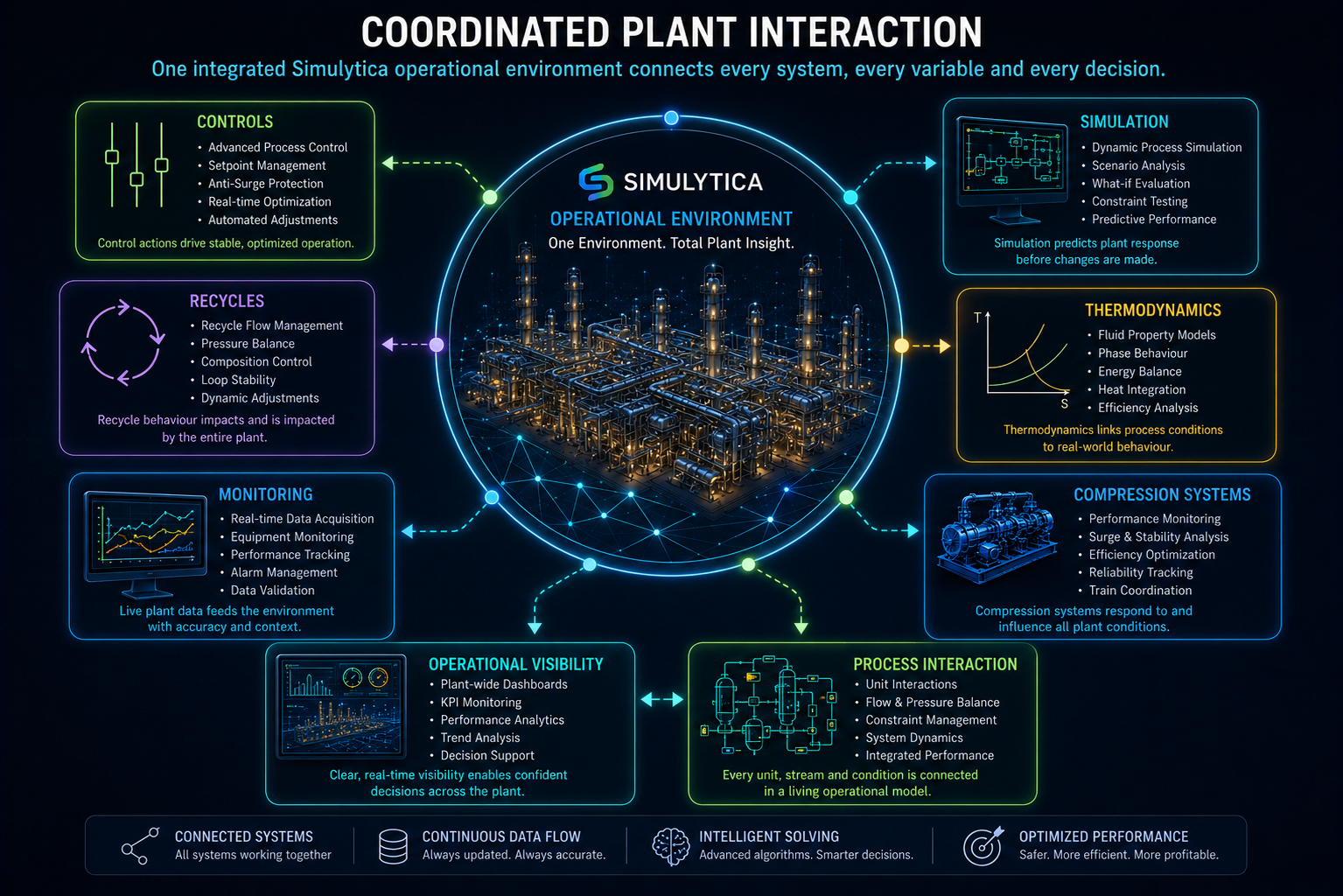
Plant behaviour emerges through interaction, not isolated operational variables
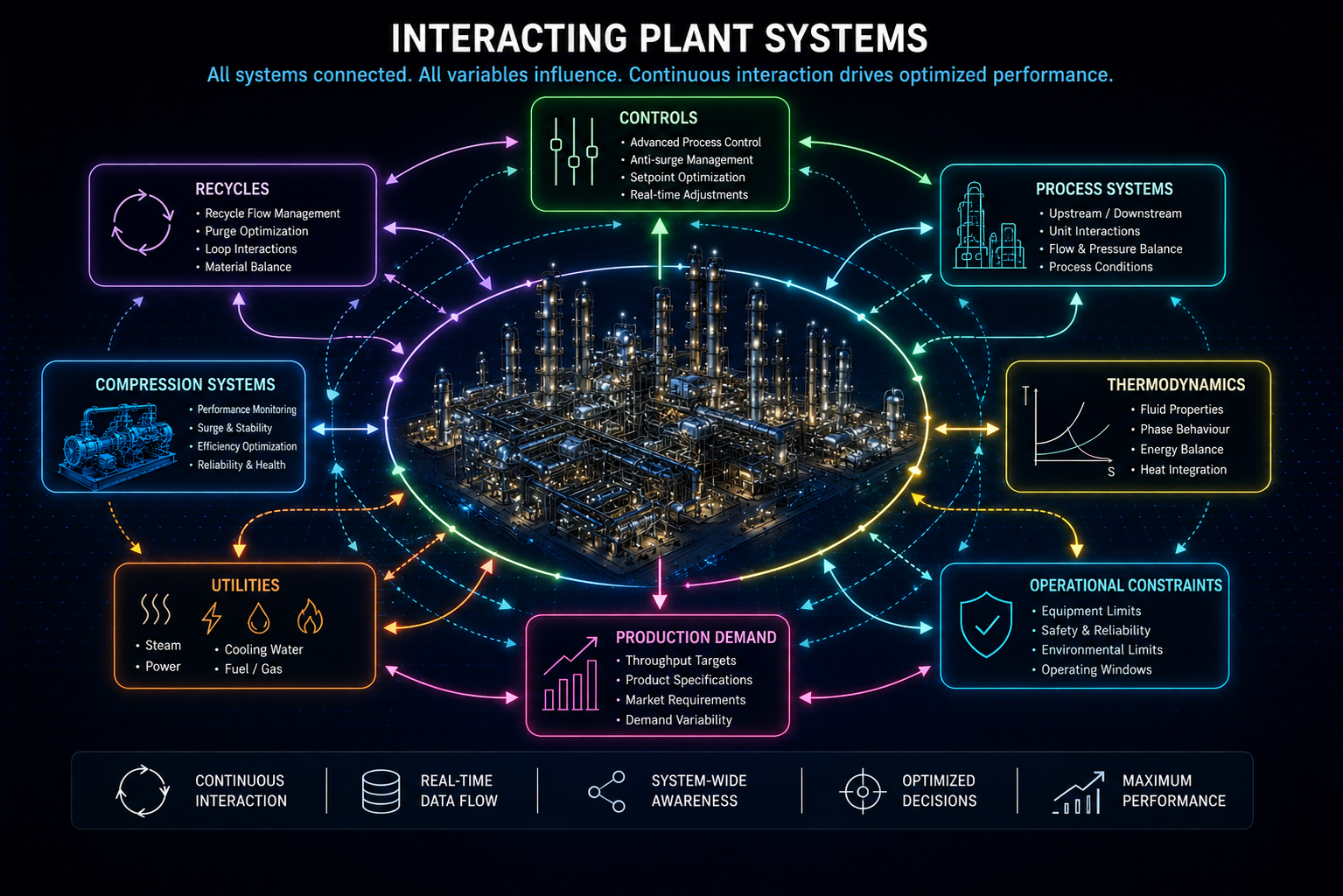
Industrial facilities are often evaluated through equipment performance, process measurements, control responses, and operating limits considered separately across different operational systems.
In practice, however, plant behaviour is continuously shaped by interaction between controls, recycles, machinery response, thermodynamics, process conditions, utilities, production demand, and wider operational constraints.
A change in one part of the facility can propagate across multiple systems, affecting machinery performance, plant stability, throughput capability, energy consumption, and wider operational response.
Understanding plant behaviour therefore requires visibility across these interactions rather than isolated operational variables alone.
Plant behaviour extends beyond isolated measurements and equipment response.
Control systems continuously influence how the plant responds
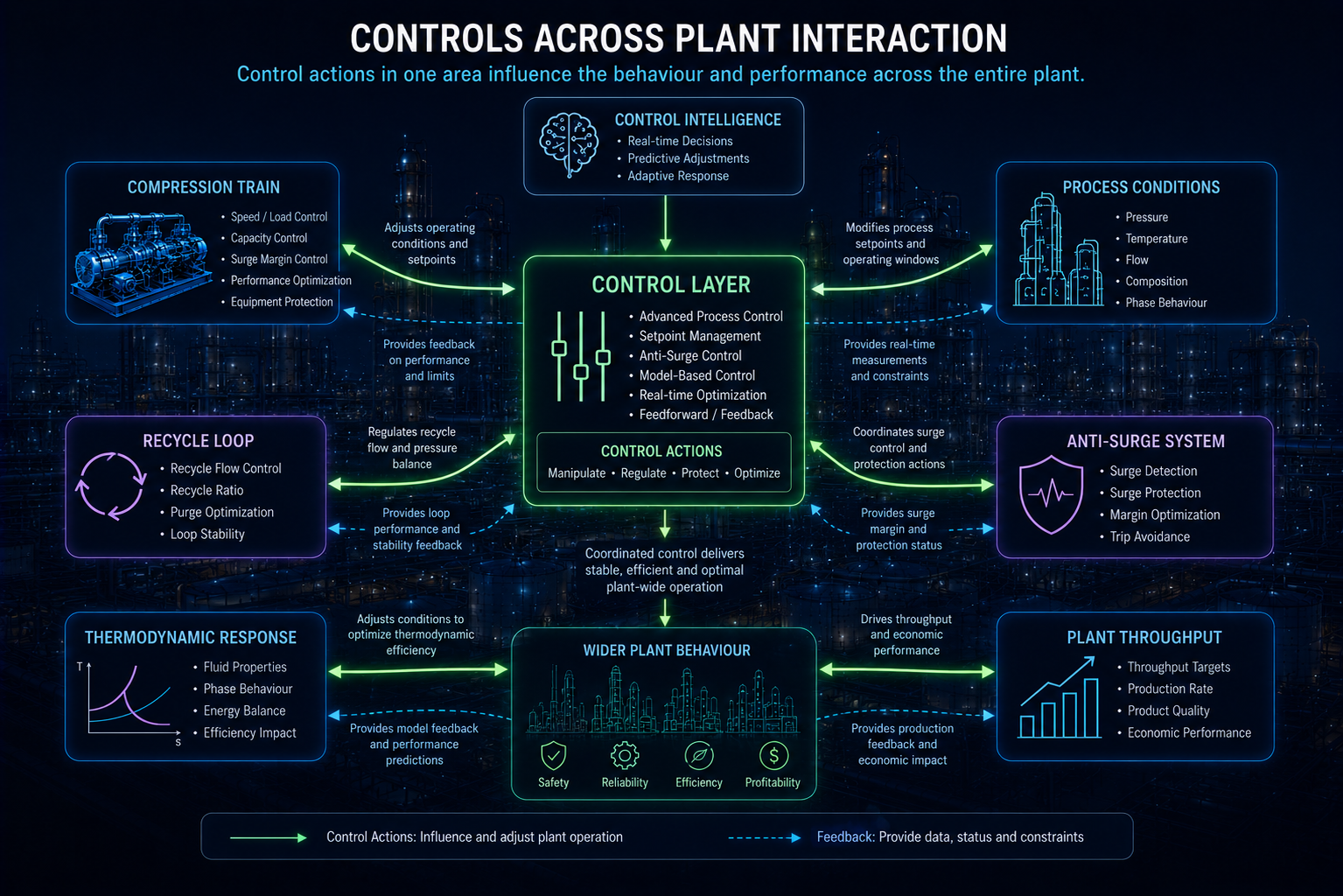
Control systems do far more than maintain individual setpoints.
Across industrial facilities, controls continuously influence process conditions, machinery behaviour, recycle response, operating stability, throughput capability, and wider plant interaction. Control actions may affect suction and discharge conditions, anti-surge behaviour, process routing, recycle flows, temperature response, and wider operational constraints across the plant.
As operating conditions change, controls become part of the dynamic interaction shaping how the plant behaves rather than simply a background layer of automation.
Understanding plant behaviour therefore requires understanding how controls influence wider operational response across the facility.
Controls continuously shape plant behaviour.
Recycle behaviour can significantly influence wider plant operation
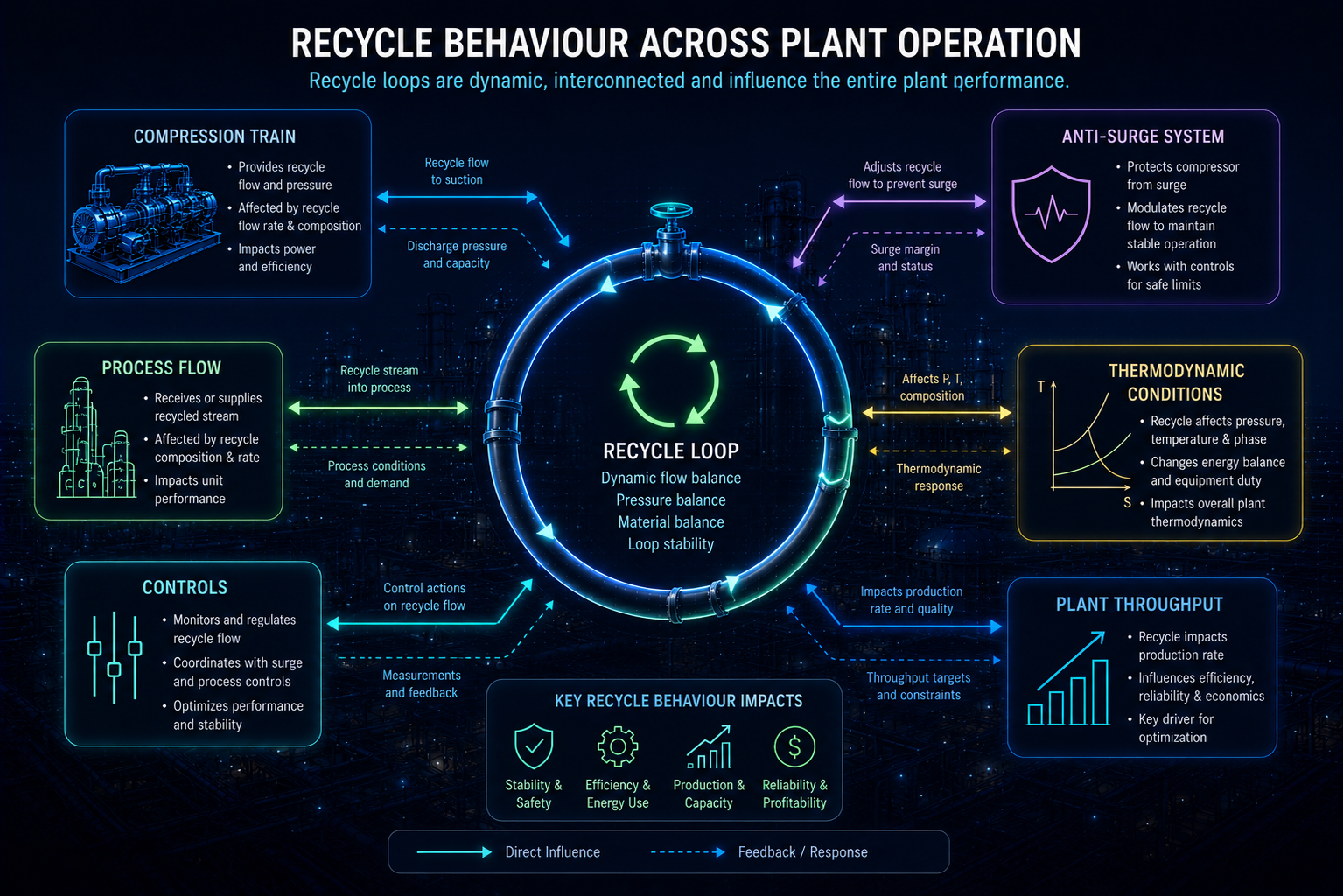
Recycle systems are often introduced to protect machinery, maintain stability, manage anti-surge response, or support wider operational flexibility. Yet recycle behaviour can also become one of the most important interacting influences across plant operation.
Changes in recycle flow may alter suction conditions, discharge conditions, thermodynamic state, compressor performance, energy consumption, throughput capability, and wider process interaction across the facility.
As recycles open, close, or respond dynamically to plant conditions, they can influence not only machinery behaviour but the wider operating state of the plant itself.
Recycle behaviour is therefore not simply a local machinery issue. It is part of wider plant interaction.
Recycles can reshape wider plant behaviour.
Small changes can propagate across wider operational systems
Industrial facilities frequently operate close to practical operating limits shaped by machinery capability, thermodynamic conditions, process demand, control response, and operational constraints.
In these environments, relatively small changes in one part of the plant can propagate across wider systems through control actions, recycle response, changing process conditions, and machinery interaction.
This can affect:
- Machinery efficiency
- Throughput capability
- Surge margin
- Operating limits
- Energy consumption
- Plant stability
- Production capability
- Wider operational response
Understanding these relationships requires visibility across the interacting operational systems influencing the plant rather than isolated operational views of individual equipment or process measurements.
Plant interaction defines operational behaviour.
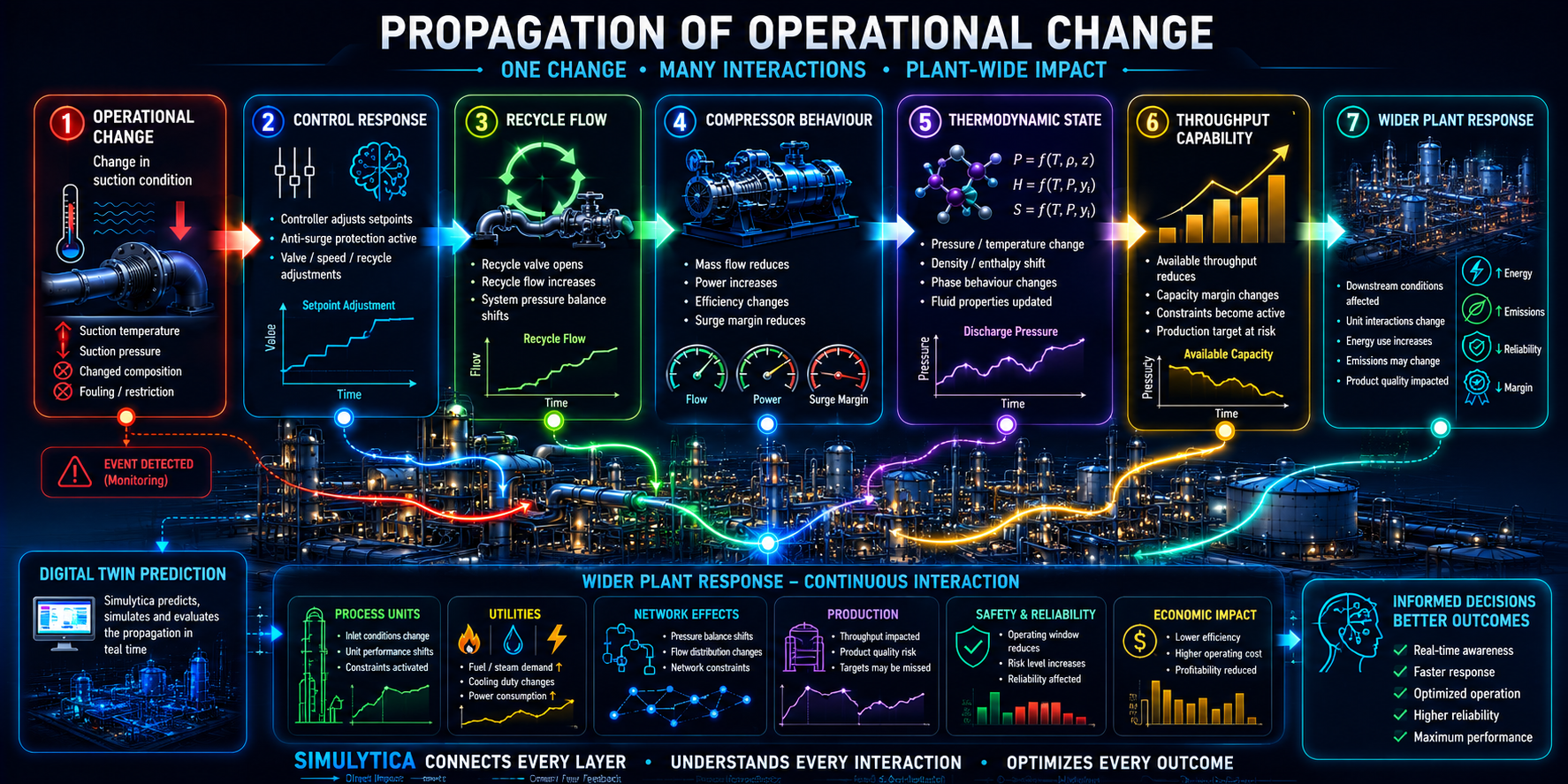
Controls, recycles, and plant interaction should be understood together
Simulytica was developed to continuously represent wider plant behaviour through coordinated industrial systems relating controls, recycles, machinery response, thermodynamics, simulation, monitoring, and process interaction within one operational environment.
Rather than treating controls, recycle behaviour, machinery analysis, and plant monitoring as disconnected operational disciplines, Simulytica continuously coordinates these interacting aspects of plant operation within one plant-aware industrial system.
This allows engineering and operational teams to better evaluate:
- Plant behaviour
- Machinery response
- Control interaction
- Recycle behaviour
- Thermodynamic response
- Operational efficiency
- Production capability
- Wider operational constraints
Understanding controls and recycles in this way supports a broader and more realistic view of how industrial facilities actually behave across changing operating conditions
Controls and recycles must be understood within wider plant interaction.